

 عربى
عربىBimetallic technology is critically important for a conical screw barrel because it dramatically extends service life, reduces wear, and lowers long-term operating costs. By fusing a high-alloy wear-resistant inner layer to a tough steel outer body, bimetallic construction enables the conical screw barrel to withstand the extreme abrasion and corrosion encountered when processing filled, reinforced, or chemically aggressive polymers—conditions that would rapidly destroy a conventional single-metal component.
This article explores every dimension of bimetallic technology as it applies to the conical screw barrel: what it is, how it works, why it outperforms alternatives, and what to look for when selecting one for your production line.
Content
- Understanding the Conical Screw Barrel: Structure and Function
- What Is Bimetallic Technology in Screw Barrel Manufacturing?
- Five Key Reasons Bimetallic Technology Is Important for a Conical Screw Barrel
- Bimetallic vs. Nitrided vs. Tool Steel: A Comparative Analysis
- Common Bimetallic Alloy Types for Conical Screw Barrels
- Applications Where Bimetallic Conical Screw Barrels Are Essential
- How a Bimetallic Conical Screw Barrel Is Manufactured
- How to Select the Right Bimetallic Conical Screw Barrel for Your Application
- Maintenance Tips to Maximize Bimetallic Conical Screw Barrel Life
- Frequently Asked Questions (FAQ)
- Conclusion: Bimetallic Technology as a Strategic Investment
Understanding the Conical Screw Barrel: Structure and Function
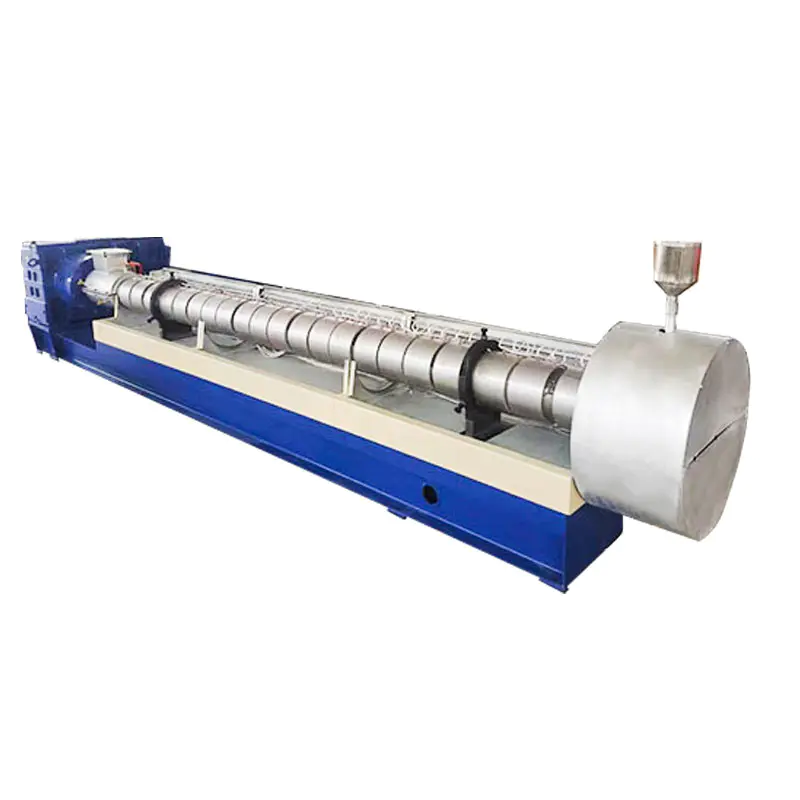
A conical screw barrel is the heart of a twin-screw extruder, particularly the counter-rotating conical twin-screw type widely used in PVC pipe, profile, and sheet production. Unlike parallel screws, conical screws taper from a large diameter at the feed end to a smaller diameter at the discharge end. This geometry creates:
- High compressive force in the melting and metering zones
- Efficient mixing with minimal heat generation
- Self-cleaning action between the intermeshing screws
- Lower shear stress, preserving thermally sensitive materials like PVC
However, these same mechanical advantages—high pressure, intimate intermeshing, and processing of mineral-filled or glass-fiber-reinforced compounds—subject the bore and screw flights to severe abrasive and corrosive attack. This is precisely where bimetallic technology becomes indispensable.
What Is Bimetallic Technology in Screw Barrel Manufacturing?
Bimetallic technology refers to the metallurgical process of bonding two distinct metals into a single, unified component. In the context of a conical screw barrel, this means:
1. The Outer Layer: Structural Steel Body
The outer shell is typically made from high-quality nitrided steel (such as 38CrMoAlA or 42CrMo). This layer provides the mechanical strength, rigidity, and machinability needed to maintain dimensional accuracy under operating pressures that can exceed 50 MPa.
2. The Inner Layer: High-Alloy Wear-Resistant Lining
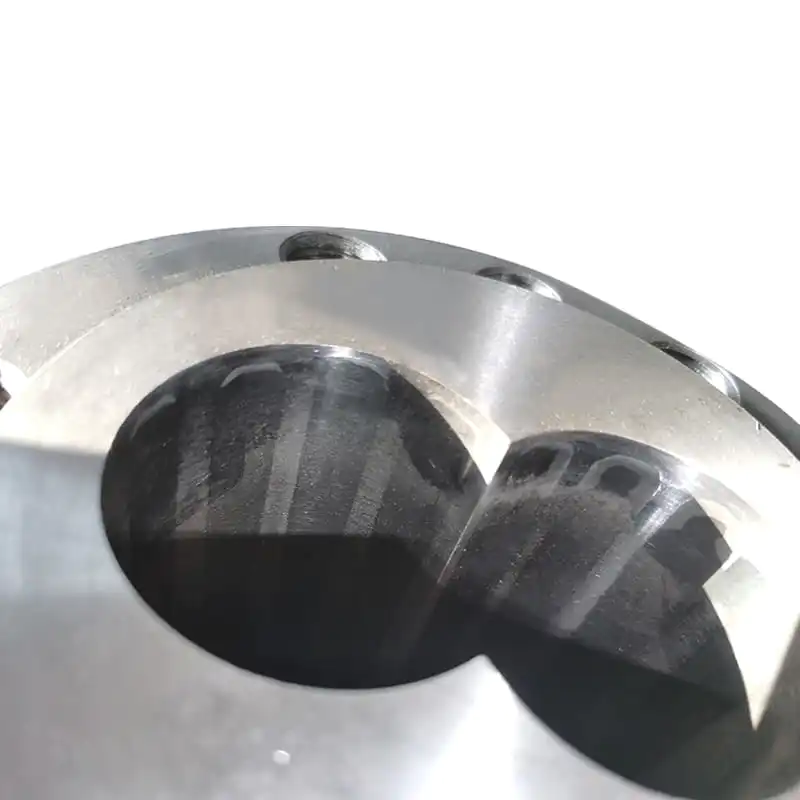
The bore of a bimetallic conical screw barrel is lined with a centrifugally cast alloy—commonly iron-based alloys containing chromium, tungsten carbide (WC), boron, or nickel-boride compounds. Hardness values typically reach HRC 58–72, far exceeding what surface nitriding alone can achieve.
3. The Metallurgical Bond
During centrifugal casting, the alloy powder melts and fuses with the steel substrate at temperatures exceeding 1,100 °C. The result is a true metallurgical bond—not a coating—with virtually zero delamination risk. Typical lining thickness ranges from 1.5 mm to 3 mm, balancing protection with regrindability.
Five Key Reasons Bimetallic Technology Is Important for a Conical Screw Barrel
① Superior Wear Resistance
Abrasive wear is the number-one cause of conical screw barrel failure. When processing glass-fiber-reinforced nylon, mineral-filled PVC, wood-plastic composites (WPC), or calcium carbonate masterbatches, hard particles continuously erode the barrel bore. A bimetallic lining with embedded tungsten carbide or iron-chromium carbides resists this abrasion at a microscopic level, reducing material loss by up to 10× compared to nitrided steel.
② Corrosion Resistance for Aggressive Polymers
Flame retardants, stabilizers, and halogenated polymers (such as PVC and PVDF) release corrosive gases and acids during processing. A nickel-rich or chromium-rich bimetallic alloy lining creates a chemically inert barrier, protecting the steel substrate and preventing pitting corrosion that degrades dimensional accuracy and product purity.
③ Extended Service Life and Lower TCO
A standard nitrided conical screw barrel processing abrasive compounds may need replacement every 3,000–5,000 hours. A bimetallic version typically achieves 8,000–15,000+ operating hours under similar conditions. When factoring in downtime, labor, and spare-part inventory, the total cost of ownership (TCO) over five years can be 40–60% lower with bimetallic construction.
④ Dimensional Stability and Output Consistency
As a barrel bore wears, the clearance between screw and barrel increases. This allows melt to leak back, reducing throughput, increasing residence time, and causing inconsistent output. A bimetallic lining maintains the designed bore diameter far longer, preserving dimensional tolerances as tight as ±0.02 mm and ensuring stable melt pressure and output rates over extended production runs.
⑤ Energy Efficiency
A worn barrel with excessive clearance demands higher screw speed to maintain output, consuming more motor energy. By retaining tight clearances, a bimetallic conical screw barrel helps maintain optimum energy efficiency throughout its service life—an increasingly important factor as energy costs and sustainability targets rise.
Bimetallic vs. Nitrided vs. Tool Steel: A Comparative Analysis
Selecting the right conical screw barrel material requires understanding how the three main options compare across the metrics that matter most in production:
| Performance Factor | Nitrided Steel | Tool Steel (D2/H13) | Bimetallic |
|---|---|---|---|
| Surface Hardness (HRC) | 55–62 | 58–64 | 60–72 |
| Abrasion Resistance | Moderate | Good | Excellent |
| Corrosion Resistance | Low | Moderate | High (alloy-dependent) |
| Typical Service Life (abrasive) | 3,000–5,000 hr | 5,000–8,000 hr | 8,000–15,000+ hr |
| Toughness (impact resistance) | High | Moderate | High (composite structure) |
| Initial Cost | Low | Moderate | Moderate–High |
| 5-Year TCO (abrasive apps) | High | Moderate | Lowest |
| Regrindability | Yes (limited) | Yes | Yes (up to 3×) |
Common Bimetallic Alloy Types for Conical Screw Barrels
Not all bimetallic linings are created equal. The ideal alloy depends on the polymer and filler being processed. Here are the most widely specified options:
Fe-Cr-C (Iron-Chromium-Carbon) Alloy
The most common and cost-effective choice. Delivers excellent abrasion resistance for glass-filled thermoplastics, mineral-filled PVC, and general-purpose compounds. Hardness: HRC 62–68.
Ni-Hard / Nickel-Boride Alloy
Preferred for corrosive applications such as PVC, PVDF, and fluoropolymers. The high nickel content imparts both corrosion and abrasion resistance. Hardness: HRC 58–65.
Tungsten Carbide (WC) Reinforced Alloy
The highest performance option. WC particles embedded in a tough matrix provide extreme wear resistance for highly abrasive applications such as carbon-fiber-reinforced polymers, WPC with high wood flour content, and ceramic-filled compounds. Hardness can reach HRC 70–72. Higher initial cost is offset by exceptional service life.
Dual-Protection Alloy (Anti-Wear + Anti-Corrosion)
Engineered for applications demanding both properties simultaneously—such as flame-retardant glass-filled nylon or brominated compounds. A layered or graded composition achieves synergistic protection.
Applications Where Bimetallic Conical Screw Barrels Are Essential
The value of a bimetallic conical screw barrel is most pronounced in demanding processing environments. Key application areas include:
- PVC pipe and profile extrusion – Processing stabilizer and filler packages in PVC generates both chemical attack and moderate abrasion. Bimetallic barrels are now the industry standard.
- Wood-plastic composites (WPC) – High wood flour or bamboo fiber content creates severe abrasion. WC-reinforced bimetallic barrels provide the only viable service life.
- Glass-fiber-reinforced nylon (PA+GF) – Glass fibers act like fine sandpaper against the barrel bore. A bimetallic lining can extend life by 5–8×.
- Calcium carbonate (CaCO₃) masterbatch – High filler loadings (40–80%) make this one of the most abrasive applications; bimetallic construction is essential.
- Flame-retardant compounds – Halogenated or phosphorus-based FR additives release corrosive by-products during processing, requiring corrosion-resistant bimetallic alloys.
- Medical and food-grade plastics – Nickel-alloy bimetallic linings prevent contamination from barrel wear particles entering the product stream.
How a Bimetallic Conical Screw Barrel Is Manufactured
Understanding the production process helps buyers assess quality. A well-made bimetallic conical screw barrel goes through these critical stages:
- Rough machining of steel outer body – The barrel blank is turned to near-net shape, with the bore pre-bored to allow for the lining thickness.
- Centrifugal casting of inner alloy – The barrel is rotated at high speed while molten alloy or alloy powder is introduced. Centrifugal force ensures uniform density and a void-free lining.
- Metallurgical bonding / diffusion annealing – A controlled thermal cycle ensures atomic-level bonding between the lining and steel substrate.
- Straightening and stress relief – The barrel is straightened under heat to eliminate distortion from the casting process.
- Precision bore grinding – The internal bore is ground to final tolerances (typically H7 or tighter), ensuring correct clearance with the conical screws.
- Non-destructive testing (NDT) – Ultrasonic testing, dye penetrant inspection, or eddy-current testing verifies lining integrity and bond quality.
- Hardness verification and surface finishing – Rockwell hardness is confirmed across multiple bore positions; surfaces are polished to the specified Ra value.
How to Select the Right Bimetallic Conical Screw Barrel for Your Application
Choosing the optimal bimetallic conical screw barrel requires evaluating several technical parameters:
| Selection Criterion | Recommendation |
|---|---|
| Material being processed | Match alloy type to abrasion/corrosion profile (see alloy guide above) |
| Filler type and loading | >30% glass/mineral → WC-reinforced alloy; <30% → Fe-Cr-C sufficient |
| Processing temperature | High-temp polymers (>300 °C) require alloys with thermal stability; verify with supplier |
| Corrosive additives | Halogen, phosphorus, or acidic components → Ni-base or dual-protection alloy |
| Screw-barrel clearance spec | Verify clearance is maintained to OEM specification after lining |
| Quality certification | Request hardness test report, NDT report, and material certificate |
Maintenance Tips to Maximize Bimetallic Conical Screw Barrel Life
Even the highest-quality bimetallic conical screw barrel benefits from proper operating and maintenance practices:
- Purge before shutdown – Always purge with a clean, low-abrasion polymer before shutdown to prevent corrosive residues from attacking the bore overnight.
- Monitor output and pressure trends – A gradual drop in output at constant settings signals increasing barrel wear; track this as an early warning system.
- Control feed temperature – Ensure the feed zone temperature profile is correct. Excessive temperature in early zones accelerates corrosion.
- Inspect bore periodically – Use a bore gauge or endoscope at scheduled maintenance intervals to measure wear at key positions along the conical bore.
- Regrind before clearance becomes critical – Bimetallic barrels can typically be reground 2–3 times before the lining is consumed, extending component life significantly.
- Store correctly – Keep spare barrels horizontal, bore protected with oil or VCI film, in a dry environment to prevent rust and bore damage.
Frequently Asked Questions (FAQ)
Conclusion: Bimetallic Technology as a Strategic Investment
For any operation that pushes a conical screw barrel with abrasive, corrosive, or highly filled polymers, bimetallic technology is not a luxury—it is the engineering-rational choice. The combination of a tough structural steel body and a high-alloy wear-resistant inner lining delivers a level of performance that no single-material solution can match.
The benefits compound over time: longer service intervals reduce downtime, consistent dimensional tolerances maintain product quality, and lower total replacement frequency reduces spare-parts inventory and logistics burden. When evaluated over a five-year production horizon, the bimetallic conical screw barrel consistently delivers the lowest total cost of ownership in demanding applications.
Selecting the right alloy type, verifying manufacturing quality through documentation, and following proper operating and maintenance practices will ensure you realize the full potential of bimetallic technology in your conical screw barrel system.