

 عربى
عربىThe energy consumption of a plastic pelleting machine is primarily affected by six major factors: the type and physical condition of the raw material, the extruder screw design and speed, barrel heating and temperature profile, throughput rate, die head configuration, and the mechanical efficiency of the drive system. In practical production environments, specific energy consumption (SEC) for plastic pelletizing typically ranges from 0.15 to 0.55 kWh per kilogram of output — a threefold difference that is almost entirely explained by how well each of these variables is optimized.
Understanding what drives energy use in a plastic pelleting machine is essential for processors looking to reduce operating costs, meet sustainability targets, and maintain competitive output pricing. This guide breaks down every major energy factor with data, comparisons, and actionable optimization strategies.
Content
- Why Energy Consumption in Plastic Pelleting Machines Matters
- Factor 1 — Raw Material Type, Form, and Moisture Content
- Factor 2 — Extruder Screw Design and Screw Speed
- Factor 3 — Barrel Heating System and Temperature Profile
- Factor 4 — Throughput Rate and Machine Utilization
- Factor 5 — Die Head Design and Screen Pack Condition
- Factor 6 — Drive Motor Efficiency and Transmission System
- Energy Consumption Comparison: Key Variables and Their Impact
- How Different Plastic Types Compare in Pelleting Energy Requirements
- FAQ: Energy Consumption of Plastic Pelleting Machines
- Conclusion: Managing Energy Consumption in Plastic Pelleting Machines
Why Energy Consumption in Plastic Pelleting Machines Matters
Energy typically accounts for 15–25% of the total operating cost of a plastic pelleting line — making it the second largest cost center after raw materials, and the most controllable variable available to plant managers.
A mid-size plastic pelleting machine with a 75 kW drive motor running at 80% load for 6,000 hours per year consumes approximately 360,000 kWh annually. At an industrial electricity price of $0.10/kWh, that equals $36,000 per year in motor energy alone — before accounting for barrel heaters, cooling water pumps, pellet dryers, and ancillary systems that together add another 20–40% to the total electrical load.
The difference between a well-optimized and a poorly configured pelleting line of the same nominal capacity can easily reach 30–40% in energy cost per ton of output, translating to $50,000–$80,000 per year on a single production line at industrial scale. Identifying and addressing the root causes of excess energy consumption is therefore one of the highest-return investments available in plastic recycling and compounding operations.
Factor 1 — Raw Material Type, Form, and Moisture Content
The single largest material-side driver of energy consumption in a plastic pelleting machine is the physical form and contamination level of the feedstock — clean, pre-sized regrind requires 20–35% less energy per kilogram than wet, densely contaminated, or film-form waste.
Material Melt Flow Index (MFI) and Viscosity
High-viscosity materials (low MFI) require significantly more mechanical work from the extruder screw to achieve homogeneous melt. For example, processing HDPE with MFI 0.3 g/10 min typically demands 15–20% more specific energy than processing HDPE with MFI 2.0 g/10 min at the same throughput rate. Each time the screw must work harder against viscous resistance, the drive motor draws proportionally more current.
Moisture Content
Water in the feedstock must be vaporized inside the barrel — consuming latent heat of approximately 2,260 kJ/kg of water. For hygroscopic materials such as PET, PA (nylon), and ABS, processing at 0.5% moisture versus the required ≤0.02% dryness increases barrel energy demand by 5–12% per percentage point of excess moisture. Pre-drying is an upfront energy cost (typically 0.05–0.15 kWh/kg) but consistently delivers net energy savings at the extruder by allowing the barrel heaters and screw to operate more efficiently.
Bulk Density and Feed Form
Low bulk density feedstocks — such as plastic film flakes (bulk density 30–80 kg/m³), expanded foam, or airy regrind — cause the extruder feed zone to run partially starved, reducing effective throughput and increasing specific energy consumption. Compaction or densification before feeding (via a side-stuffer, melt-feed roller, or compactor-extruder combination) can restore productive throughput and reduce SEC by 20–30% when processing light film materials on a standard single-screw plastic pelleting machine.
Factor 2 — Extruder Screw Design and Screw Speed
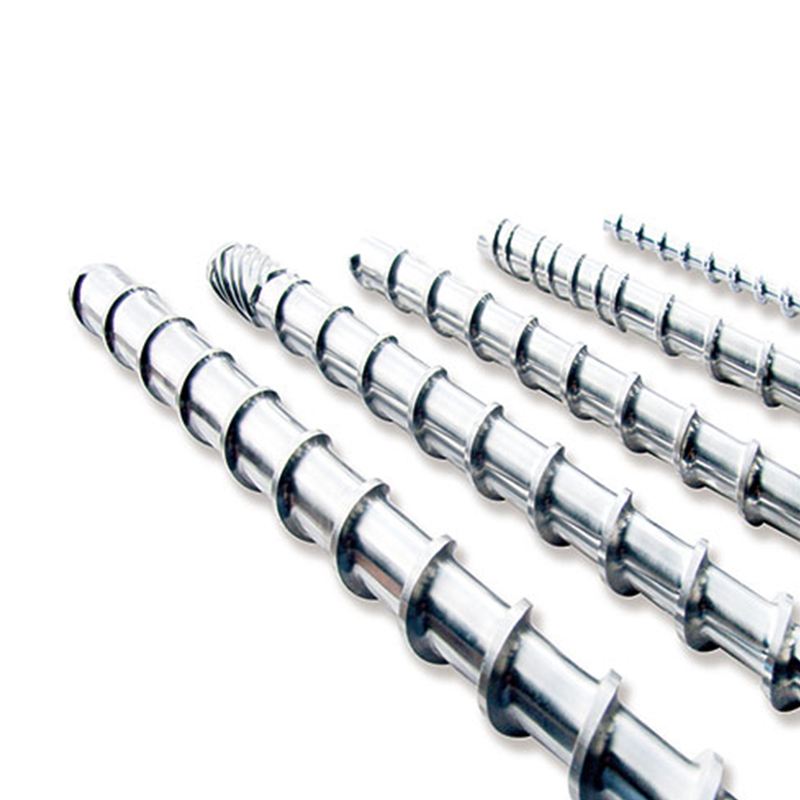
The screw is the core energy-converting component of every plastic pelleting machine — its geometry determines how efficiently mechanical energy is converted into melt, and running the screw at the wrong speed for a given material is one of the most common sources of avoidable energy waste.
Length-to-Diameter (L/D) Ratio
Longer screws (higher L/D ratios) distribute mechanical work over more barrel length, achieving better melt homogeneity at lower screw speeds — which reduces peak torque and associated energy draw. A single-screw extruder with L/D 30:1 typically achieves 10–18% lower SEC than an equivalent diameter L/D 20:1 screw at the same output rate, because the longer melt path allows lower RPM operation without sacrificing melt quality.
Screw Speed and the Torque-Speed Relationship
Drive power scales with the product of torque and speed. For a given material and output rate, there is typically an optimal screw speed range where the balance between shear heating (which reduces the need for barrel heaters) and mechanical energy input is most favorable. Running below this range over-relies on barrel heaters; running above it generates excessive viscous dissipation heat, requiring cooling energy to compensate.
Practical data from twin-screw compounding lines shows that reducing screw speed by 15% while maintaining throughput through increased feeder rate can reduce specific mechanical energy by 8–12% — though this trade-off must be validated against melt quality requirements for each formulation.
Screw Wear
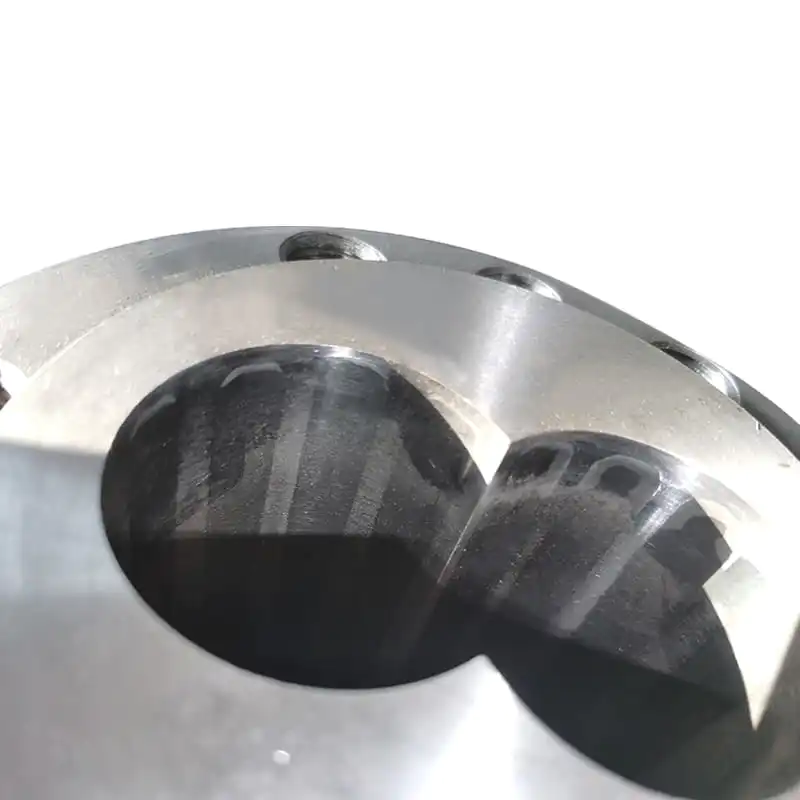
A worn screw with 0.5–1.0 mm radial clearance to the barrel (versus a new screw's 0.1–0.2 mm clearance) creates a melt leakage path that forces the screw to rotate faster to achieve the same output — increasing energy consumption by 15–25% on heavily worn assemblies. Regular inspection and timely screw/barrel refurbishment is among the most cost-effective energy management strategies for an aging plastic pelleting machine.
Factor 3 — Barrel Heating System and Temperature Profile
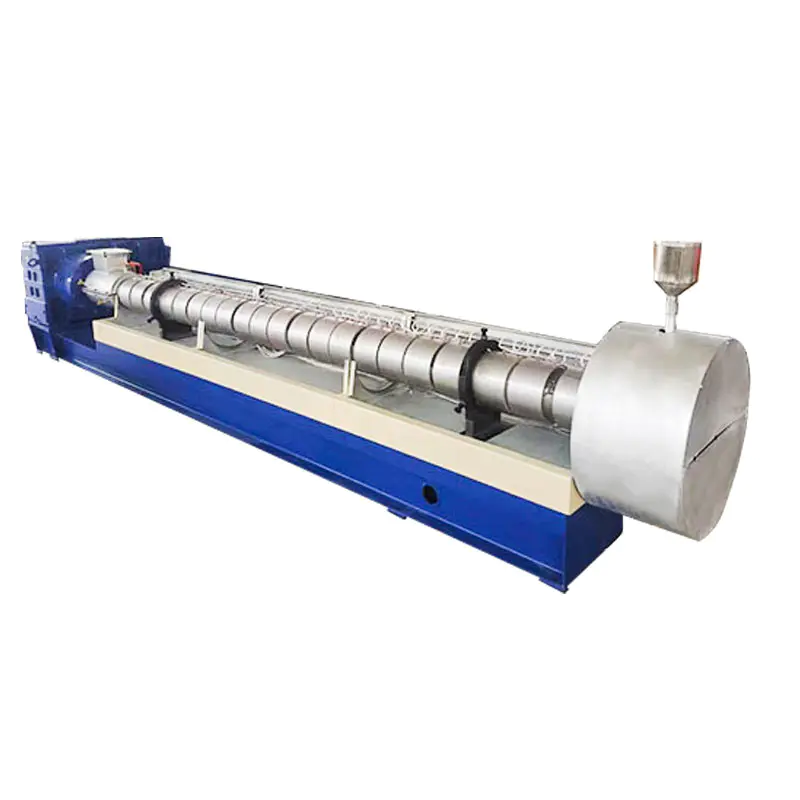
Barrel heaters account for 20–35% of total electrical energy consumption on a plastic pelleting machine during steady-state production — and the type of heating technology, the accuracy of temperature zone control, and the presence or absence of barrel insulation all significantly affect this figure.
Resistive Band Heaters vs Induction Heating
Traditional ceramic or mica band heaters radiate 40–60% of their heat outward into the surrounding air rather than inward into the barrel wall — a fundamental inefficiency of resistance heating elements mounted on a cylindrical surface. Electromagnetic induction heating systems, which induce eddy currents directly in the barrel steel, achieve thermal efficiencies of 90–95% versus 50–65% for resistance band heaters. Published case studies document energy savings of 30–45% on barrel heating costs after converting a plastic pelleting machine from band heaters to induction heating — with payback periods of 12–24 months at industrial scale.
Barrel Insulation
Uninsulated extruder barrels operating at 200–280°C lose significant heat to convection and radiation in the surrounding workspace. Installing ceramic fiber or silica aerogel insulation jackets over barrel heater zones reduces surface heat loss by 50–70%, lowering heater duty cycle and cutting barrel heating energy consumption by 15–25% with a negligible capital outlay (typically $200–600 per meter of barrel length).
Temperature Profile Optimization
Many operators run barrel temperatures higher than necessary "to be safe" — each 10°C of excess barrel temperature above the optimum for a given polymer and throughput rate increases heater energy consumption by approximately 3–6% and accelerates polymer thermal degradation. Systematic temperature profile optimization, conducted by gradually reducing zone temperatures while monitoring melt quality, typically identifies savings of 8–15% in heating energy without any change in output quality.
Factor 4 — Throughput Rate and Machine Utilization
Running a plastic pelleting machine below its design throughput capacity is one of the most wasteful operating modes — fixed energy loads (barrel heaters, cooling systems, control electronics) are spread over less output, dramatically increasing specific energy consumption per kilogram produced.
The relationship between throughput and SEC is non-linear: reducing throughput to 50% of rated capacity typically increases SEC by 40–70% rather than the intuitive 50% — because fixed auxiliary loads remain constant while productive output halves. Consider a machine with a 90 kW drive and 30 kW of auxiliary loads (heaters, pumps, chillers):
- At 100% throughput (500 kg/h): total power ≈ 120 kW → SEC = 0.24 kWh/kg
- At 70% throughput (350 kg/h): total power ≈ 100 kW → SEC = 0.286 kWh/kg (+19%)
- At 50% throughput (250 kg/h): total power ≈ 85 kW → SEC = 0.34 kWh/kg (+42%)
This data underlines why scheduling production in full-rate, continuous runs rather than intermittent low-rate operation consistently delivers lower energy costs per ton — and why right-sizing the plastic pelleting machine to actual production volume is critical during equipment selection.
Factor 5 — Die Head Design and Screen Pack Condition
The die head and screen pack assembly creates back-pressure that the screw must overcome to push melt through the die — and a partially blocked screen pack or restrictive die design can increase drive motor energy consumption by 10–30% compared to a clean, well-designed die system.
Screen Pack Contamination
As contaminants accumulate on the screen pack mesh, melt flow resistance increases progressively. A screen pack at 60% blockage versus a fresh screen generates 30–50% higher melt pressure, which the extruder drive must compensate for with increased torque. Continuous screen changers (slide plate or rotary designs) that allow screen replacement without stopping the line maintain consistently low back-pressure and prevent the energy penalty of operating with a clogged screen.
Die Hole Count and Geometry
A die plate with more, smaller holes distributes melt flow over a larger total cross-sectional area, reducing pressure drop per hole and lowering overall die resistance. Increasing die hole count by 20–30% on a retrofitted die plate can reduce melt pressure by 15–25 bar — directly reducing the specific mechanical energy required from the extruder drive. Die holes must be regularly inspected for polymer buildup at the entrance and exit lands, which gradually increases flow resistance even in nominally clean operation.
Factor 6 — Drive Motor Efficiency and Transmission System
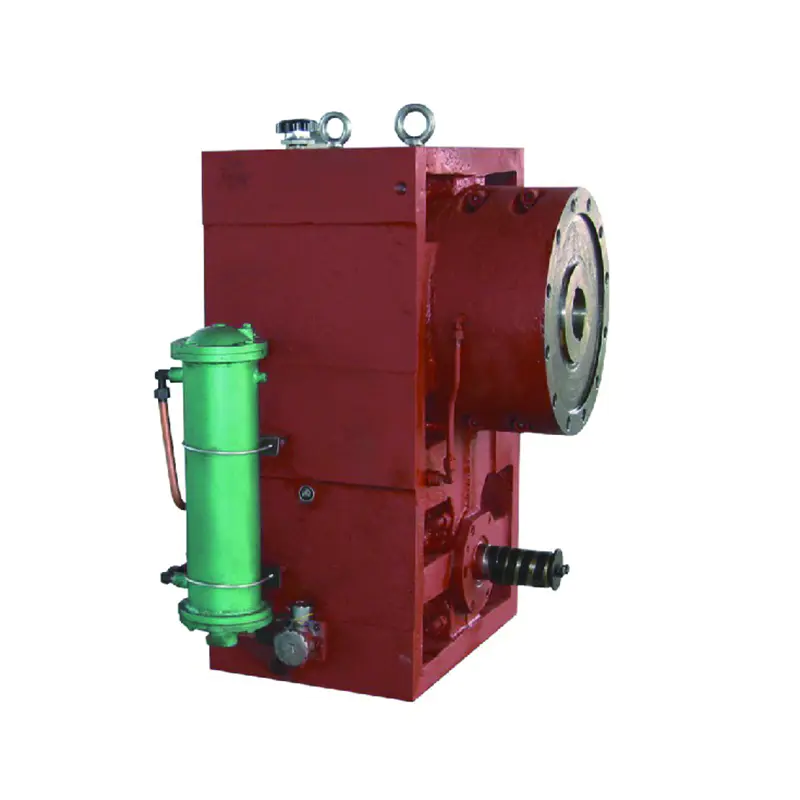
The main drive motor and its gearbox transmission account for 50–65% of total electrical energy input to a plastic pelleting machine — making motor efficiency class and variable frequency drive (VFD) control the highest-leverage hardware interventions for reducing energy consumption.
Motor Efficiency Class
Industrial motors are classified by efficiency under IEC 60034-30 standards. An IE3 Premium Efficiency motor (efficiency ≥ 93–95% at full load) consumes 3–5% less energy than an IE1 Standard Efficiency motor of the same power rating — a saving that compounds to significant kWh totals over 6,000+ annual operating hours. For a 90 kW drive motor running 6,000 hours/year at $0.10/kWh, upgrading from IE1 to IE3 saves approximately $1,620–$2,700 per year from motor efficiency alone.
Variable Frequency Drives (VFD)
A VFD allows the extruder drive motor to run at precisely the speed required for the current production conditions rather than at full line speed with mechanical throttling. Since power consumption scales approximately with the cube of motor speed for centrifugal loads, a 10% reduction in motor speed through VFD control theoretically reduces power consumption by 27%. For plastic pelleting applications where screw speed is varied to match material and throughput requirements, VFD control consistently delivers 10–20% energy savings versus fixed-speed direct-on-line starting on the same motor and screw configuration.
Energy Consumption Comparison: Key Variables and Their Impact
The table below quantifies the approximate energy impact of each major factor, giving plant managers a prioritized roadmap for energy reduction investment.
| Energy Factor | Worst-Case SEC Penalty | Typical Energy Saving Potential | Investment Required | Payback Period |
| Wet / unprocessed feedstock | +15–30% | 10–25% | Low (process change) | <6 months |
| Worn screw / barrel | +15–25% | 12–22% | Medium (refurbishment) | 6–18 months |
| Band heaters → induction heating | +30–45% heating loss | 30–45% on heating | Medium-High | 12–24 months |
| No barrel insulation | +15–25% heating load | 15–25% | Low | <12 months |
| Under-utilization (50% capacity) | +40–70% SEC | 25–40% (scheduling) | None (management) | Immediate |
| Clogged screen pack | +10–30% drive load | 8–25% | Low (maintenance) | Immediate |
| IE1 vs IE3 drive motor | +3–5% motor load | 3–5% | Medium (motor upgrade) | 2–5 years |
| No VFD on drive motor | +10–20% drive energy | 10–20% | Medium | 12–30 months |
Table 1: Energy impact summary for each major factor affecting plastic pelleting machine consumption, with estimated savings potential, investment level, and payback period.
How Different Plastic Types Compare in Pelleting Energy Requirements
The polymer type is a fixed variable that plant operators cannot change, but it determines the baseline energy demand of the pelleting process and should inform equipment sizing from the outset.
| Polymer | Processing Temp (°C) | Typical SEC (kWh/kg) | Drying Required? | Relative Energy Demand |
| LDPE / LLDPE | 160–210 | 0.15–0.25 | No | Low |
| HDPE | 180–240 | 0.18–0.30 | No | Low–Medium |
| PP (Polypropylene) | 190–240 | 0.18–0.28 | No | Low–Medium |
| PVC (Rigid) | 160–200 | 0.22–0.35 | No | Medium |
| ABS | 220–260 | 0.25–0.38 | Yes (80–85°C, 2–4 h) | Medium–High |
| PET (bottle-grade regrind) | 265–290 | 0.30–0.50 | Yes (160°C, 4–6 h) | High |
| PA (Nylon 6 / 66) | 240–280 | 0.28–0.45 | Yes (80°C, 4–8 h) | High |
Table 2: Approximate specific energy consumption (SEC) comparison by polymer type for plastic pelleting machines under optimized operating conditions. Drying energy is additional to the SEC values shown.
FAQ: Energy Consumption of Plastic Pelleting Machines
Q1: What is a good specific energy consumption (SEC) benchmark for a plastic pelleting machine?
A well-optimized plastic pelleting machine processing clean polyolefins (PE, PP) should achieve an SEC of 0.18–0.28 kWh/kg at rated throughput. For mixed post-consumer recycled plastics requiring more intensive processing, 0.28–0.40 kWh/kg is a realistic benchmark. Values above 0.45 kWh/kg on standard polyolefins typically indicate a combination of under-utilization, worn mechanical components, suboptimal temperature profiling, or feedstock issues that warrant a systematic energy audit.
Q2: Does a twin-screw pelleting machine consume more energy than a single-screw machine?
For equivalent throughput on clean, single-polymer material, a single-screw plastic pelleting machine typically consumes 10–20% less specific energy than a co-rotating twin-screw machine — because the twin-screw's higher shear mixing capability comes at an energy cost. However, twin-screw machines are far more energy-efficient when the application requires intensive compounding, reactive extrusion, or processing of highly contaminated or mixed-polymer feedstocks, where a single-screw machine would require multiple passes or pre-processing steps that consume equivalent or greater total energy.
Q3: How much energy does the pellet cooling and drying section add to total pelleting line consumption?
The downstream cooling and drying section of an underwater pelletizing (UWP) line — including the process water pump, centrifugal dryer, and water temperature control chiller — typically adds 0.03–0.08 kWh/kg to the total pelleting line SEC, representing 12–20% of total line energy. Air-cooled strand pelletizing lines have lower cooling energy costs (0.01–0.03 kWh/kg) but are limited in throughput and pellet shape consistency for demanding applications. Optimizing process water temperature (typically 30–60°C depending on polymer) minimizes chiller load without compromising pellet surface quality.
Q4: Can real-time energy monitoring reduce pelleting machine operating costs?
Yes — real-time energy monitoring systems with per-zone power metering have consistently demonstrated 8–15% reductions in pelleting line energy consumption in documented industrial implementations. By displaying live SEC data on the operator HMI alongside throughput rate and melt pressure, operators can immediately identify when conditions deviate from the energy-optimal operating point and make corrective adjustments. Energy monitoring also creates the dataset needed to quantify the impact of maintenance interventions such as screen pack changes and screw refurbishment — turning energy data into a predictive maintenance trigger.
Q5: How does ambient temperature affect the energy consumption of a plastic pelleting machine?
Ambient temperature affects pelleting energy in two opposing ways. In cold environments (below 15°C), barrel heaters must work harder to reach and maintain processing temperatures, and the feed zone may require supplementary heating to prevent the polymer from stiffening in the hopper — increasing heating energy by 5–15% in unheated facilities during winter. In hot environments (above 35°C), the cooling water system must work harder to remove heat from the pellets and maintain process water temperature, increasing chiller and pump energy. Climate-controlled machine rooms with stable 18–25°C ambient temperature optimize both heating and cooling energy demands year-round.
Q6: What is the fastest payback energy improvement for an existing plastic pelleting machine?
The three fastest-payback energy improvements for an existing plastic pelleting machine are: (1) production scheduling optimization — running at or near rated capacity in continuous shifts rather than intermittent low-rate operation (immediate payback, zero investment); (2) barrel insulation installation — applying ceramic fiber insulation jackets to heater zones (payback typically under 12 months, low investment); and (3) screen pack management protocol — implementing a pressure-based screen change schedule to prevent clogged-screen energy penalties (immediate payback, operational change only). Together, these three measures can reduce total pelleting line SEC by 15–30% without any capital expenditure on major equipment.
Conclusion: Managing Energy Consumption in Plastic Pelleting Machines
The energy consumption of a plastic pelleting machine is not a fixed cost — it is a variable that responds significantly to material preparation quality, operating conditions, equipment maintenance state, and process control sophistication. The difference between a poorly managed and an optimized pelleting operation on identical equipment routinely exceeds 30%, representing tens of thousands of dollars per year per production line.
The highest-return improvements follow a clear priority order: first address the zero-investment opportunities (throughput scheduling, screen pack protocols, temperature profile optimization); then deploy low-cost physical upgrades (barrel insulation, pre-drying); then consider medium-term equipment investments (induction heating, VFD drives, screw refurbishment). This structured approach ensures that energy capital is deployed where it delivers the fastest and most reliable return.
As energy prices continue to rise globally and sustainability reporting requirements expand, processors who systematically measure, benchmark, and reduce the specific energy consumption of their plastic pelleting machines will gain a durable competitive advantage — in operating cost, carbon footprint, and customer compliance credentials simultaneously.