

 عربى
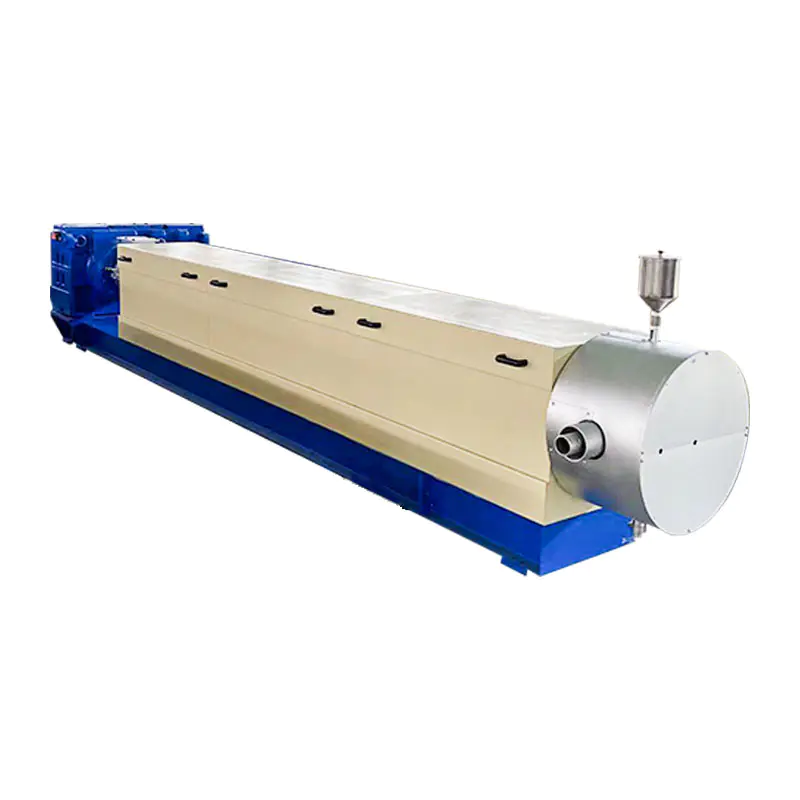
عربىA plastic pelleting machine consists of eight core components: the feeding system, extruder barrel and screw, heating and cooling system, die head, pellet cutting system, water cooling or air cooling unit, dewatering and drying system, and the control panel. Each component plays a precise role in transforming raw plastic material — whether virgin resin, regrind flakes, or recycled film — into uniform, consistently sized plastic pellets ready for downstream processing.
Understanding these components in detail helps operators select the right machine configuration, perform targeted maintenance, diagnose output quality issues, and make informed purchasing decisions. This guide covers every major part of a plastic pelleting machine with specifications, functional explanations, and comparative data.
Content
- What Is a Plastic Pelleting Machine and How Does It Work?
- The 8 Main Components of a Plastic Pelleting Machine
- 1. Feeding System (Hopper and Feeder)
- 2. Extruder Barrel and Screw — The Core Processing Unit
- 3. Heating and Temperature Control System
- 4. Screen Changer and Melt Filter
- 5. Die Head — Shaping the Melt into Strands or Drops
- 6. Pellet Cutting System — The Defining Component
- 7. Cooling and Dewatering System
- 8. Control Panel and Automation System
- Component Summary: All 8 Parts at a Glance
- Comparing the Three Pellet Cutting Systems: Which Is Right for Your Application?
- Single-Screw vs. Twin-Screw Extruder: Component Comparison
- Frequently Asked Questions About Plastic Pelleting Machine Components
- What is the most important component in a plastic pelleting machine?
- How often should the screw and barrel be replaced?
- What is the difference between a screen changer and a melt pump?
- Can all plastic pelleting machines process recycled material?
- What causes irregular pellet size in a plastic pelleting machine?
- How is the die head cleaned and maintained?
- What is the role of the vacuum degassing vent in a pelleting extruder?
- Conclusion
What Is a Plastic Pelleting Machine and How Does It Work?
A plastic pelleting machine — also called a plastic pelletizer, granulator, or compounding extruder — is an industrial system that melts, homogenizes, filters, and cuts plastic material into small, uniform cylindrical or spherical granules (pellets) typically 2–5 mm in diameter.
The general process flow is:
- Feed → raw material enters the hopper
- Melt → screw conveys and melts material through heated barrel zones
- Filter → melt passes through a screen changer to remove contaminants
- Form → melt is forced through die holes to create continuous strands or drops
- Cut → rotating blades cut strands or face-cut melt into pellets
- Cool & dry → pellets are cooled in water or air and dried before collection
The global plastic pelletizing equipment market was valued at approximately USD 3.4 billion in 2024 and is forecast to grow at a CAGR of 5.8% through 2030, driven by rising demand for recycled plastic pellets, compounding applications, and masterbatch production.
The 8 Main Components of a Plastic Pelleting Machine
1. Feeding System (Hopper and Feeder)
The feeding system is the entry point of the plastic pelleting machine and is responsible for delivering raw material into the extruder at a consistent, controlled rate — directly determining output uniformity and throughput stability.
A poorly calibrated feeder causes surging (variable output), incomplete melting, or screw starvation — all of which degrade pellet quality. The feeding system typically comprises:
- Hopper: A conical or rectangular storage vessel mounted above the feed throat. Capacity ranges from 50 liters (lab-scale) to over 2,000 liters (industrial). Some hoppers include agitators or vibrators to prevent bridging of powders or flakes.
- Gravimetric feeder (loss-in-weight): Measures the weight of material dispensed per unit time; accuracy typically ±0.3–0.5%. Used when consistent throughput or precise additive dosing is critical — for example, compounding masterbatch where pigment concentration must be held within ±0.1%.
- Volumetric feeder: Dispenses by volume (screw speed); lower cost but less accurate (±2–5%). Adequate for single-material pelletizing lines where blend consistency is not critical.
- Side feeder / starve feeder: A secondary twin-screw feeder that introduces fillers (glass fiber, calcium carbonate, talc) into the barrel mid-zone rather than at the main feed throat — preventing fiber breakage and ensuring even dispersion.
- Film/flake compactor feeder: Used specifically in recycled film pelleting lines. A densification screw or agglomeration device pre-compresses low-bulk-density film (as low as 30 kg/m³) to a bulk density of 200–350 kg/m³ before feeding into the extruder throat.
2. Extruder Barrel and Screw — The Core Processing Unit
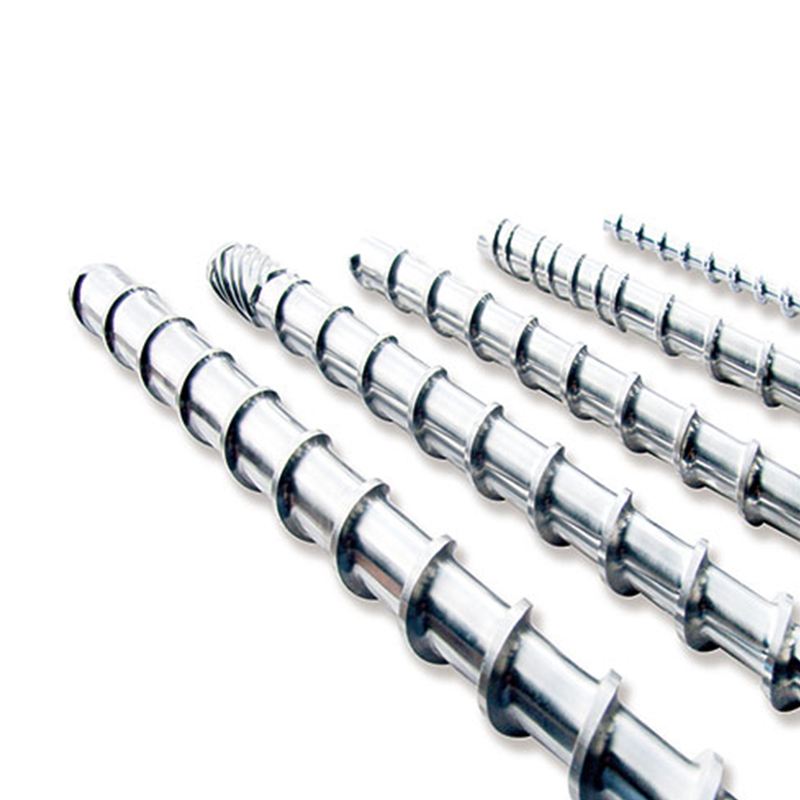
The extruder barrel and screw assembly is the heart of any plastic pelleting machine, responsible for conveying, melting, mixing, degassing, and pressurizing the plastic melt — all within a single continuous operation.
Screw configurations commonly used in plastic pelletizers:
- Single-screw extruder (SSE): One Archimedean screw rotating within the barrel. L/D ratio typically 20:1 to 36:1. Best for homogeneous materials — virgin PE, PP, PS pelletizing. Lower capital cost (USD 15,000–80,000 for mid-range models).
- Twin-screw extruder (TSE) — co-rotating: Two intermeshing screws rotating in the same direction. Superior mixing and dispersive compounding; L/D ratio 32:1 to 60:1. Essential for compounding, color masterbatch, filled compounds, and reactive extrusion. Throughput: 50–3,000 kg/h depending on screw diameter (20–200mm). Cost: USD 80,000–600,000+.
- Twin-screw extruder — counter-rotating: Screws rotate in opposite directions. Better for PVC compounding, high-shear applications, and material sensitive to heat degradation.
Key screw geometry parameters:
- L/D ratio (Length-to-diameter): Higher L/D = more processing time, better mixing and degassing. Recycling lines typically use L/D 36–44 to handle variable feed quality.
- Compression ratio: Ratio of feed zone channel depth to metering zone channel depth. Typical range: 2.5:1 to 4.5:1. Higher compression = better melting of low-bulk-density materials.
- Screw material: Nitrided steel (standard), bimetallic (wear-resistant alloy liner — 3–5× longer service life for abrasive fillers), or stainless steel (for food-grade and pharmaceutical applications).
3. Heating and Temperature Control System
The heating system maintains precise barrel temperature across multiple independent zones, each controlled to within ±1–2°C, ensuring the plastic melt reaches the correct viscosity profile for filtration, die flow, and pellet formation.
Barrel heating methods used in plastic pelleting machines:
- Cast aluminum band heaters: Most common type; low cost, quick replacement, heating power 500–3,000W per zone.
- Ceramic band heaters: Higher thermal efficiency; lower surface temperature reduces radiant heat loss by up to 30%.
- Induction heating: Electromagnetic induction heats the barrel wall directly; energy savings of 25–50% vs. resistance heaters; faster response time; premium cost.
Each zone is equipped with a thermocouple (Type J or Type K) that feeds data to a PID (Proportional-Integral-Derivative) controller, which modulates heater power and optional barrel cooling fans or water-cooled jackets to maintain setpoint temperature. A typical industrial pelletizing extruder has 4–12 independently controlled barrel zones plus die zone control.
4. Screen Changer and Melt Filter
The screen changer is the filtration component of a plastic pelleting machine, positioned between the extruder outlet and die head to remove solid contaminants, gels, un-melted particles, and degraded material from the polymer melt stream.
Screen mesh sizes used in plastic pelletizing:
- Coarse (40–80 mesh / 400–180 µm): For heavily contaminated recycled streams — first-pass filtration of film or post-consumer regrind.
- Medium (100–120 mesh / 150–125 µm): General-purpose pelletizing of clean regrind or compounded materials.
- Fine (150–200 mesh / 100–75 µm): For optical film, fiber-grade pellets, or applications requiring high melt cleanliness.
Screen changer types by operational mode:
- Manual screen changer: Simplest and lowest cost; requires production stop for screen replacement. Suitable for virgin material lines with low contamination.
- Slide-plate continuous screen changer: Two screen positions on a sliding plate; one active, one on standby. Screen switch in 2–5 seconds without stopping production. Most common type on mid-range recycling lines.
- Rotary continuous screen changer: Rotating disc with multiple filter positions; continuous production with automatic, timed screen advancement. Ideal for highly contaminated post-consumer recycling streams running 24/7.
- Self-cleaning backflush filter: Backflushes blocked screen segments with clean melt, extending filter service life by 5–10×. Pressure-sensor-triggered at a set differential pressure threshold (typically 80–120 bar).
5. Die Head — Shaping the Melt into Strands or Drops
The die head is the component that shapes the filtered polymer melt into the geometry required for pellet cutting, with die hole size, count, and layout directly determining pellet diameter, throughput per hole, and cutting system compatibility.
Die holes are typically 2–4 mm in diameter (producing 2–3.5 mm diameter pellets after cutting). Common configurations:
- Small lab die (4–8 holes): 20–100 kg/h throughput
- Mid-range production die (12–36 holes): 100–600 kg/h throughput
- Large industrial die (48–200+ holes): 600–5,000+ kg/h throughput
Die materials include tool steel (H13) for general use and tungsten carbide for abrasive-filled compounds (glass fiber, mineral), extending service life from approximately 500 hours (steel) to over 3,000 hours (carbide-lined) in abrasive service.
Die heating is maintained by electric cartridge heaters or an oil-heated manifold to keep the die face at processing temperature and prevent premature melt solidification at the die holes. Die face temperature is typically set 10–30°C above the polymer's melt temperature.
6. Pellet Cutting System — The Defining Component
The pellet cutting system is the most application-specific component of a plastic pelleting machine, with the chosen cutting method determining pellet shape, size uniformity, surface quality, and suitability for downstream processing equipment.
There are three principal cutting technologies:
- Strand pelletizing (cold cut): Melt strands exit the die, travel through a water bath (typically 2–6 meters long, water temperature 20–40°C), solidify, and are then cut by a rotating blade granulator head. Pellet shape: cylindrical. L/D ratio of pellets typically 1:1 to 2:1. Most economical and robust method. Best for PE, PP, PA, PET, PS, ABS, PC. Throughput: 50–5,000 kg/h.
- Underwater pelletizing (UWP): Blades rotate directly against the die face submerged in a water flow chamber. Melt is cut immediately as it exits the die hole, then carried away in tempered water. Pellet shape: spherical. Consistent size: ±0.1 mm. Best for polyolefins, TPE, EVA, PET, hot-melt adhesives. Throughput: 100–20,000 kg/h. Capital cost 2–4× higher than strand pelletizing but required for soft or sticky materials that cannot form stable strands.
- Air hot-face pelletizing (dry-face / air-cooled): Similar to underwater but uses an air stream instead of water for cooling. Pellet shape: lenticular or spherical. Used for moisture-sensitive materials (PA, PET, TPU) or where water contact is undesirable. Throughput: 50–2,000 kg/h.
Blade materials: Tool steel (general purpose), tungsten carbide (for filled or abrasive compounds), ceramic (rare, for specific applications). Blade replacement intervals range from 200 hours (abrasive service, steel blades) to 2,000+ hours (clean service, carbide blades).
7. Cooling and Dewatering System
The cooling and dewatering system ensures pellets reach a safe handling temperature (typically below 60°C surface temperature) and moisture content (below 0.1% for most materials) before collection — critical for preventing pellet agglomeration, sticking, and downstream moisture defects.
For strand pelletizing lines:
- Water bath: Stainless steel trough with chilled water circulation. Water temperature controlled at 20–40°C. Strand travel distance: 2–8 meters depending on throughput and material thermal conductivity.
- Air knife / blow-off: Removes surface water from strands before the cutting unit, preventing blade slippage and pellet clustering after cutting.
For underwater pelletizing lines:
- Process water system: Closed-loop tempered water circuit at 40–80°C (must be warm enough to prevent premature die freeze-off, yet cool enough to solidify pellet surfaces within the cutting zone). Flow rates: 30–200 m³/h depending on throughput.
- Centrifugal pellet dryer: Horizontal or vertical centrifuge drum with internal rotor paddles. Pellet/water slurry enters at top; paddles separate pellets and water by centrifugal force; water drains through perforated screen; dried pellets exit via outlet chute. Residual moisture: 0.05–0.15%. Processing time: 15–45 seconds. This is the standard dewatering device on all underwater pelletizing systems.
For moisture-sensitive engineering plastics (PA6, PA66, PET, PBT), an additional hot-air fluid bed dryer is installed after the centrifugal dryer, reducing moisture to below 50 ppm — essential to prevent hydrolytic degradation during subsequent injection molding or film extrusion.
8. Control Panel and Automation System
The control panel is the central intelligence of the plastic pelleting machine, integrating real-time monitoring, process parameter control, alarm management, and data logging across all subsystems from feeder to pellet collection.
Modern pelletizing control systems in 2026 typically feature:
- PLC (Programmable Logic Controller): Core process logic and safety interlock management. Scan cycle: 1–10 ms. Brands with industrial-standard protocols (Profibus, EtherNet/IP, Profinet).
- HMI (Human-Machine Interface): Touchscreen display (typically 12–21 inch) showing real-time temperature profiles, screw speed, melt pressure, motor current, throughput rate, and alarm status. Recipe storage: 50–500 programmable product recipes.
- Melt pressure monitoring: Continuous pressure sensors before and after the screen changer; differential pressure triggers screen change alarm at typically 80–150 bar differential. Absolute melt pressure: 100–350 bar operating range.
- Screw speed control: Variable frequency drives (VFDs) on the main extruder motor and feeder motor for precise throughput adjustment. Screw speed range: 5–600 rpm depending on extruder size.
- Remote monitoring and Industry 4.0 connectivity: OPC-UA data export, SCADA integration, and cloud-based performance analytics are standard on 2026 premium models — enabling predictive maintenance alerts based on motor current trending or melt pressure drift.
Component Summary: All 8 Parts at a Glance
The table below summarizes all eight main components with their primary function, critical performance parameter, and common failure modes.
| Component | Primary Function | Key Performance Parameter | Common Failure Mode | Maintenance Interval |
|---|---|---|---|---|
| Feeding System | Deliver material at set rate | Feed accuracy ±0.3–5% | Bridging, feeder starvation | Weekly inspection |
| Barrel & Screw | Melt, mix, pressurize | Melt temperature ±2°C | Screw/barrel wear, degradation | 2,000–5,000 hr inspection |
| Heating System | Maintain zone temperatures | Zone accuracy ±1–2°C | Heater burnout, TC failure | Monthly check |
| Screen Changer | Filter melt contaminants | Differential pressure <120 bar | Screen clogging, seal leaks | Per-pressure alarm |
| Die Head | Shape melt into strands/drops | Hole diameter tolerance ±0.05mm | Hole plugging, die wear | 500–3,000 hr (material dependent) |
| Cutting System | Cut melt into pellets | Pellet length CV <5% | Blade wear, blade gap drift | 200–2,000 hr (blade type) |
| Cooling & Dewatering | Cool and dry pellets | Residual moisture <0.1% | Screen clog, pellet sticking | Weekly cleaning |
| Control Panel | Monitor and control all systems | PLC response <10ms | Sensor drift, I/O card failure | Annual calibration |
Table 1: Summary of the eight main components of a plastic pelleting machine — function, key performance parameter, common failure mode, and recommended maintenance interval.
Comparing the Three Pellet Cutting Systems: Which Is Right for Your Application?
The choice of cutting system is the single most consequential component decision when specifying a plastic pelleting machine, as it determines pellet shape, suitable materials, throughput range, and total system cost.
| Criterion | Strand Pelletizing | Underwater Pelletizing | Air Hot-Face Pelletizing |
|---|---|---|---|
| Pellet shape | Cylindrical | Spherical | Lenticular / spherical |
| Size uniformity | ±5–10% | ±0.1–2% | ±2–5% |
| Suitable for sticky/soft materials | No | Yes | Partially |
| Water contact | Yes (bath) | Yes (submerged) | No |
| Moisture-sensitive materials (PA, PET) | Requires post-dryer | Requires post-dryer | Preferred |
| Throughput range | 50–5,000 kg/h | 100–20,000 kg/h | 50–2,000 kg/h |
| Relative capital cost | 1.0× (baseline) | 2–4× | 1.5–2.5× |
| Best for | PE, PP, PA, ABS, PS, PET | TPE, EVA, hot-melt, polyolefins | PA, PET, TPU, moisture-sensitive |
Table 2: Side-by-side comparison of strand pelletizing, underwater pelletizing, and air hot-face pelletizing across pellet shape, uniformity, material suitability, throughput, and cost.
Single-Screw vs. Twin-Screw Extruder: Component Comparison
The extruder type is the most impactful specification decision for a plastic pelleting machine purchase, as it determines mixing capability, material versatility, throughput range, and total system cost.
| Parameter | Single-Screw Extruder | Twin-Screw Extruder (Co-rotating) |
|---|---|---|
| Mixing performance | Distributive only; limited dispersive mixing | Excellent distributive and dispersive mixing |
| Typical L/D ratio | 20:1 – 36:1 | 32:1 – 60:1 |
| Screw diameter range | 30–200mm | 20–200mm |
| Throughput (typical) | 20–5,000 kg/h | 50–3,000 kg/h |
| Capital cost (mid-range) | USD 15,000–80,000 | USD 80,000–600,000+ |
| Best application | Virgin resin pelletizing, simple recycling | Compounding, masterbatch, filled materials |
| Additive incorporation | Limited (<5% filler) | Up to 70% filler (e.g. CaCO₃, glass fiber) |
Table 3: Technical and commercial comparison between single-screw and twin-screw extruders as the core processing unit in a plastic pelleting machine.
Frequently Asked Questions About Plastic Pelleting Machine Components
What is the most important component in a plastic pelleting machine?
The extruder barrel and screw is the most critical component because it performs the core transformation — converting solid plastic into a uniform melt — and its design determines what materials can be processed, at what throughput, and with what quality. However, the pellet cutting system is the component that most directly determines pellet shape, size consistency, and the range of polymers that can be successfully pelletized.
How often should the screw and barrel be replaced?
Service life depends heavily on material being processed. For virgin polyolefins (PE, PP), nitrided steel screws typically last 8,000–12,000 operating hours. For glass-fiber-filled or mineral-filled compounds, bimetallic screws are recommended and last 5,000–8,000 hours. Wear is detected by measuring pellet output variation, increasing melt pressure at the same throughput, or declining melt temperature uniformity. Annual dimensional inspection of screw clearance is best practice.
What is the difference between a screen changer and a melt pump?
A screen changer filters solid contaminants from the melt stream by passing it through fine wire mesh screens. A melt pump (gear pump) is a separate downstream component that provides precise, pulse-free melt pressure to the die head — decoupling die pressure from screw speed variations. Melt pumps are used on precision pelletizing lines where consistent die pressure (±2 bar) is needed for tight pellet weight consistency. They are separate devices and not interchangeable.
Can all plastic pelleting machines process recycled material?
Not all machines are equally suited for recycled material. Recycled feedstocks (post-consumer film, regrind, mixed post-industrial scrap) require: a higher L/D extruder (36:1 or more) for degassing volatiles; a continuous or backflush screen changer for high contamination loads; a film compactor or forced feeder to handle low-bulk-density input; and often a two-stage vacuum degassing vent to remove moisture and volatiles before the die. Standard single-screw pelletizers for virgin resin typically lack these features.
What causes irregular pellet size in a plastic pelleting machine?
Irregular pellet size typically traces to one of five root causes: (1) inconsistent feeder rate causing melt throughput surging; (2) worn cutting blades producing tails, fines, or elongated cuts; (3) incorrect blade-to-die face gap on underwater pelletizers; (4) unstable melt pressure at the die from screen changer pressure spikes; or (5) incorrect strand haul-off speed relative to extruder throughput on strand pelletizing lines. The control panel's process trend data is the first diagnostic tool.
How is the die head cleaned and maintained?
Die heads are cleaned during planned production stops by heating the die to processing temperature and purging with a compatible cleaning compound or purging resin. Clogged individual holes are cleared with brass cleaning rods — never steel tools that could damage hole geometry. Die face surfaces on underwater pelletizers should be inspected for erosion every 500–1,000 hours; worn faces cause blade gap inconsistency and pellet quality degradation. A spare die head is recommended on high-OEE production lines to minimize downtime during planned die service.
What is the role of the vacuum degassing vent in a pelleting extruder?
A vacuum degassing vent (typically located at Zone 5–7 on a twin-screw extruder) removes moisture, residual monomers, solvents, and volatiles from the polymer melt by applying vacuum (typically −0.08 to −0.098 MPa gauge) to an open barrel zone. This is essential when processing recycled material with residual surface moisture, or when producing engineering plastic pellets where dissolved volatiles would create bubbles or voids in the final pellet. Without degassing, volatile content in the melt can cause stringing, die drool, or foamed pellets.
Conclusion
A plastic pelleting machine is a precisely engineered system where each of the eight core components — feeding system, extruder barrel and screw, heating system, screen changer, die head, cutting system, cooling and dewatering unit, and control panel — must be correctly specified and maintained for the machine to deliver consistent, high-quality pellets.
For procurement decisions, the most impactful component choices are the extruder type (single vs. twin-screw, directly tied to material versatility and compounding capability) and the cutting system (strand, underwater, or air-cooled, which determines pellet shape and material compatibility). All other components should then be matched to support these two core decisions.
For maintenance and troubleshooting, most pellet quality issues — size variation, contamination, surface defects — trace directly back to the screen changer, cutting blades, die head, or feeder consistency. A structured preventive maintenance schedule targeting these four components, combined with real-time process monitoring via the control panel, is the most effective strategy for maximizing output quality and machine uptime on any plastic pelleting line.