

 عربى
عربىIn modern extrusion and injection molding industries, maintaining consistent output and reducing operational energy consumption are critical for competitiveness. Equipment manufacturers and processors are continuously upgrading core components to achieve higher productivity and lower costs. One of the most effective innovations in this field is the Conical Screw Barrel, a design widely adopted in PVC processing, profile extrusion, pipe manufacturing, and specialty plastic applications.
Compared with traditional parallel screw systems, a Conical Screw Barrel offers structural and mechanical advantages that directly influence output stability, plasticizing performance, torque transmission, and energy efficiency. Its tapered geometry enables optimized compression, better shear control, and improved melt homogeneity, which together enhance production reliability.
Content
- What Is a Conical Screw Barrel?
- How a Conical Screw Barrel Improves Output Stability
- How a Conical Screw Barrel Enhances Energy Efficiency
- Conical vs. Parallel Screw Barrel: Performance Comparison
- Applications That Benefit Most
- Material Flow Dynamics and Process Stability
- Maintenance and Long-Term Durability
- Frequently Asked Questions (FAQ)
- Conclusion: A Strategic Upgrade for Modern Processing
What Is a Conical Screw Barrel?
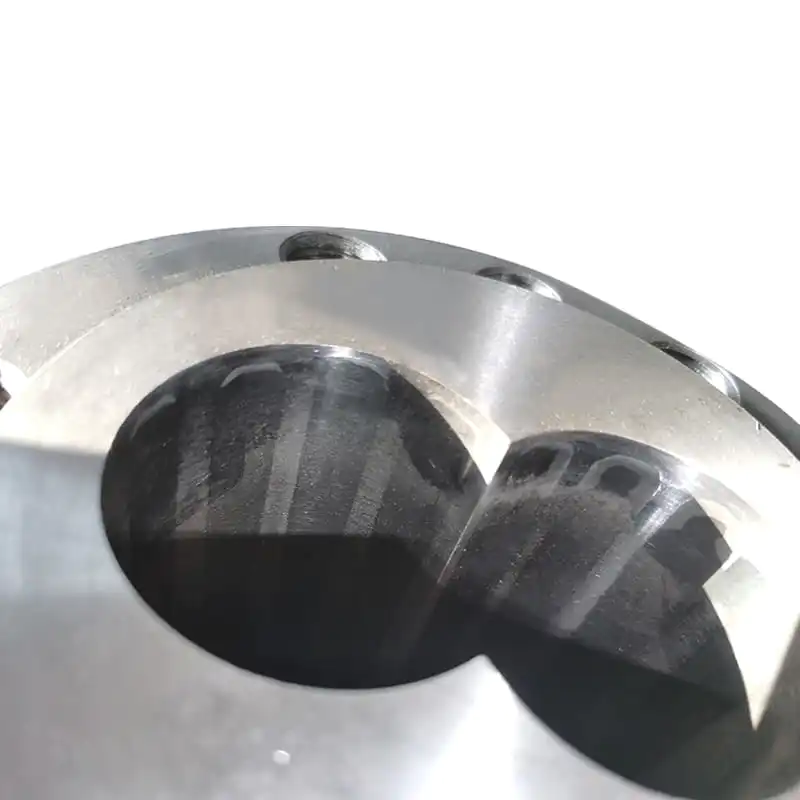
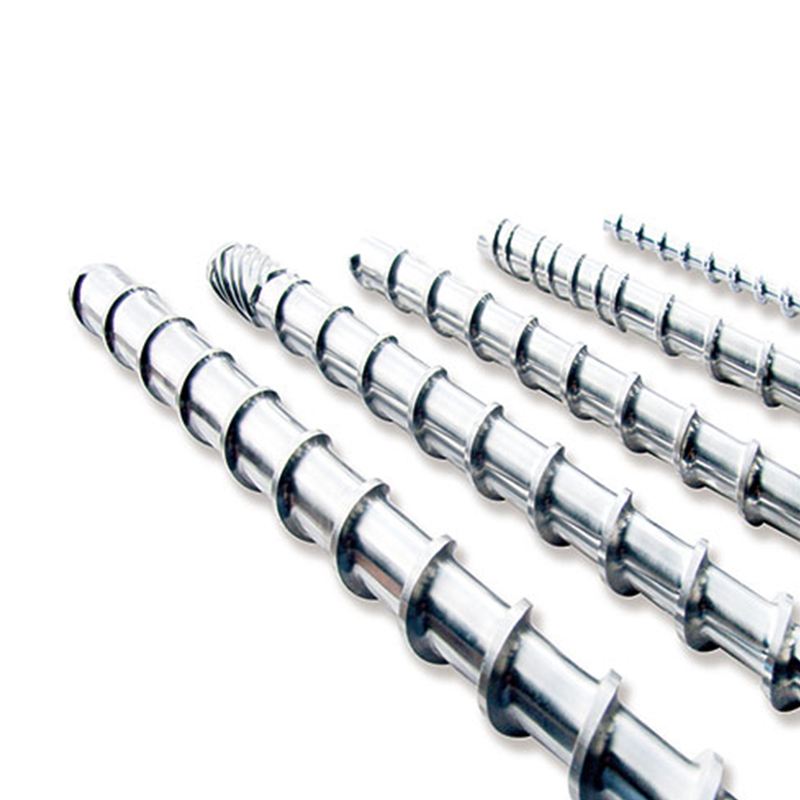
A Conical Screw Barrel consists of two intermeshing screws arranged in a conical configuration, where the screw diameter gradually decreases from the feed zone to the metering zone. This geometry differs significantly from parallel twin-screw designs.
Key Structural Characteristics
- Gradually decreasing screw diameter
- High torque transmission capability
- Shorter effective plasticizing length
- Enhanced compression ratio control
- Strong axial and radial pressure resistance
The tapered configuration increases material compaction efficiency and provides greater control over melting and mixing behavior. These characteristics directly influence output consistency and energy consumption.
How a Conical Screw Barrel Improves Output Stability
1. Optimized Material Compression
The conical geometry gradually reduces the channel volume, creating controlled and progressive compression. This ensures:
- Uniform melting of polymer granules
- Reduced unmelted particles
- Stable pressure build-up
- Consistent discharge rate
Stable compression minimizes pressure fluctuation at the die head, which directly enhances dimensional accuracy in pipes, sheets, and profiles.
2. Superior Torque Transmission
A Conical Screw Barrel features larger screw diameters at the feed section, enabling higher torque capacity. This allows:
- Processing of high-viscosity materials
- Improved handling of PVC compounds
- Stable feeding even under heavy load
Higher torque capability reduces sudden load variations that typically cause output instability in conventional systems.
3. Reduced Material Backflow
The tapering channel improves forward conveying efficiency and reduces backflow. As a result:
- Material residence time becomes more consistent
- Melt homogeneity improves
- Surface defects decrease
How a Conical Screw Barrel Enhances Energy Efficiency
1. Shorter Plasticizing Section
Due to enhanced compression efficiency, a Conical Screw Barrel typically requires a shorter length-to-diameter ratio compared to parallel screws. This reduces:
- Mechanical friction losses
- Motor load duration
- Heat generation from excessive shear
2. Efficient Heat Transfer
The improved contact between material and barrel surface enhances heat exchange. More efficient thermal management means:
- Lower barrel heater consumption
- Reduced cooling demand
- Faster startup times
3. Lower Motor Power Requirements
Because material plasticization occurs more efficiently, energy usage per kilogram of output decreases. Manufacturers often report:
- 5–15% reduction in energy consumption
- Higher output per kWh
- Lower long-term operational costs
Conical vs. Parallel Screw Barrel: Performance Comparison
| Feature | Conical Screw Barrel | Parallel Screw Barrel |
|---|---|---|
| Compression Efficiency | High, progressive | Moderate |
| Torque Capacity | Higher | Medium |
| Energy Consumption | Lower per output unit | Higher |
| Suitability for PVC | Excellent | Good |
| Machine Footprint | More compact | Longer barrel length required |
| Output Stability | Very stable | May fluctuate under load |
This comparison highlights how a Conical Screw Barrel offers measurable improvements in both mechanical efficiency and production consistency.
Applications That Benefit Most
- PVC pipe extrusion
- Window and door profile production
- WPC (wood plastic composite) processing
- Cable trunking manufacturing
- High-filler compound extrusion
In high-filler and rigid PVC formulations, torque demand and thermal sensitivity are significant. The Conical Screw Barrel design ensures controlled shear and temperature, minimizing degradation risks.
Material Flow Dynamics and Process Stability
The gradual reduction in screw diameter creates a controlled pressure gradient. This improves:
- Volatile removal
- Gas venting efficiency
- Color dispersion uniformity
- Dimensional tolerance consistency
Stable melt flow is essential for preventing surface waviness, internal voids, and uneven wall thickness. Improved flow dynamics are central to the operational advantages of a Conical Screw Barrel.
Maintenance and Long-Term Durability
Modern Conical Screw Barrel systems are typically manufactured using:
- Nitrided alloy steel
- Bimetallic lining
- High-wear-resistant coatings
These materials enhance resistance to abrasion from fillers and corrosive PVC additives, extending service life and preserving efficiency over time.
Frequently Asked Questions (FAQ)
1. Is a Conical Screw Barrel suitable for all plastics?
It performs best in rigid PVC and high-filler compounds. For some engineering plastics, parallel screws may be more common depending on processing requirements.
2. Does it reduce production cost?
Yes. Lower energy consumption, reduced scrap rates, and higher output stability contribute to lower cost per unit production.
3. How long does a Conical Screw Barrel last?
With proper maintenance and material selection, service life can extend several years, depending on processing conditions and filler content.
4. Is upgrading from parallel to conical worthwhile?
For PVC profile and pipe manufacturers seeking improved stability and energy savings, upgrading to a Conical Screw Barrel often yields measurable ROI through increased productivity and reduced downtime.
Conclusion: A Strategic Upgrade for Modern Processing
A Conical Screw Barrel enhances output stability through optimized compression, superior torque transmission, and improved melt homogeneity. At the same time, it increases energy efficiency by reducing mechanical loss, improving thermal management, and lowering motor load.
For manufacturers focused on consistent quality, higher throughput, and long-term cost savings, adopting a Conical Screw Barrel represents a technically sound and economically strategic decision.