

 عربى
عربىA wire & cable extruder is the core machine that applies insulation or jacketing material around a conductor by forcing molten polymer through a precision die — and it is the single most critical piece of equipment in any cable production line. Without a properly selected and calibrated extruder, consistent wall thickness, dielectric performance, and surface finish are impossible to achieve at commercial scale.
From automotive wiring harnesses and building cables to fiber-optic buffer tubes and high-voltage power cables, virtually every type of electrical or data cable depends on extrusion technology. This guide explains how these machines work, compares the main configurations, and gives buyers a practical framework for selecting the right system.
Content
- How Does a Wire & Cable Extruder Work?
- What Are the Main Types of Wire & Cable Extruders?
- Which Technical Specifications Matter Most When Evaluating a Cable Extruder?
- Which Materials Can a Wire & Cable Extruder Process?
- How Is Automation Transforming the Modern Cable Extruder?
- How Do You Choose the Right Wire & Cable Extruder for Your Application?
- What Maintenance Does a Wire & Cable Extruder Require?
- Frequently Asked Questions About Wire & Cable Extruders
- Conclusion: Getting Wire & Cable Extrusion Right Starts with the Machine
How Does a Wire & Cable Extruder Work?
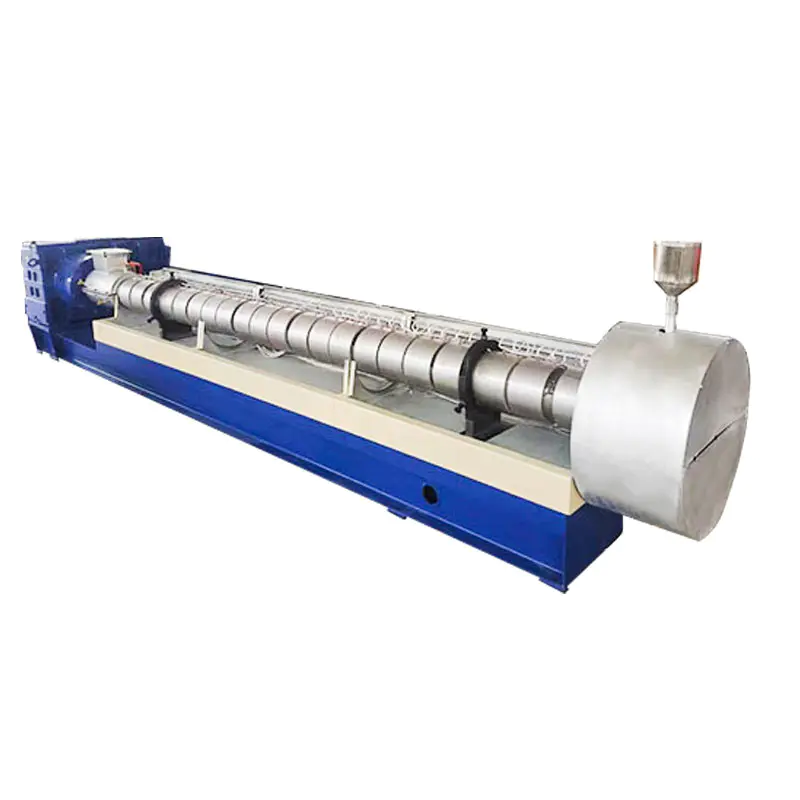
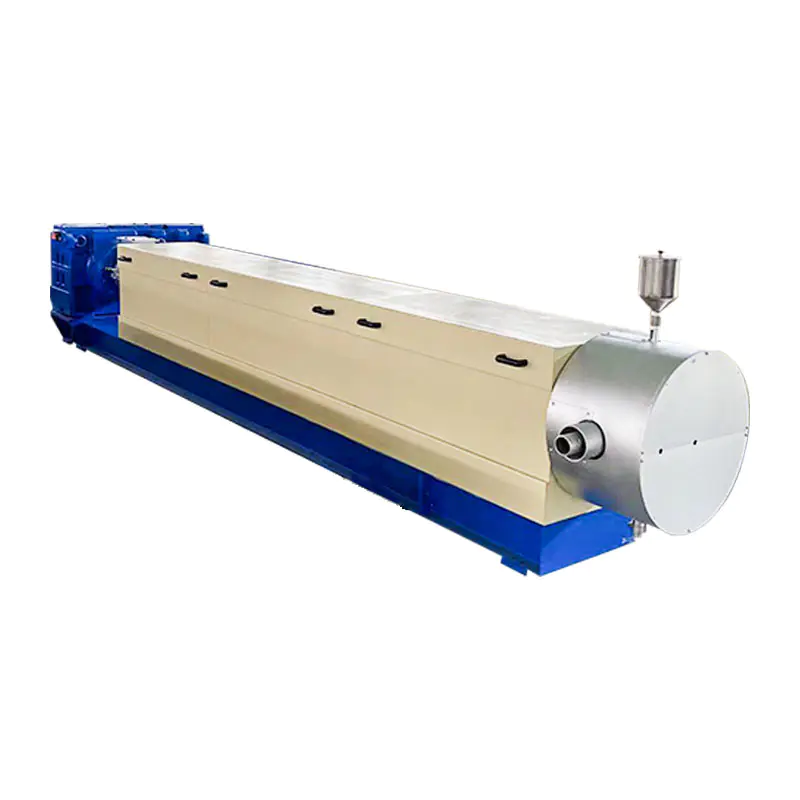
The operating principle is straightforward: polymer pellets are fed into a heated barrel, melted and homogenized by a rotating screw, then pushed at controlled pressure through a crosshead die that wraps the melt around a moving conductor. The coated wire is then cooled in a water trough, measured by a laser gauge, and taken up on a reel.
Key Sub-Systems of a Cable Extrusion Line
- Pay-off unit: Supplies the bare conductor or previously insulated core at constant, controlled tension to prevent stretching or catenary sag.
- Pre-heater: Raises conductor temperature (typically 80–200 °C) to improve adhesion and eliminate micro-voids at the interface.
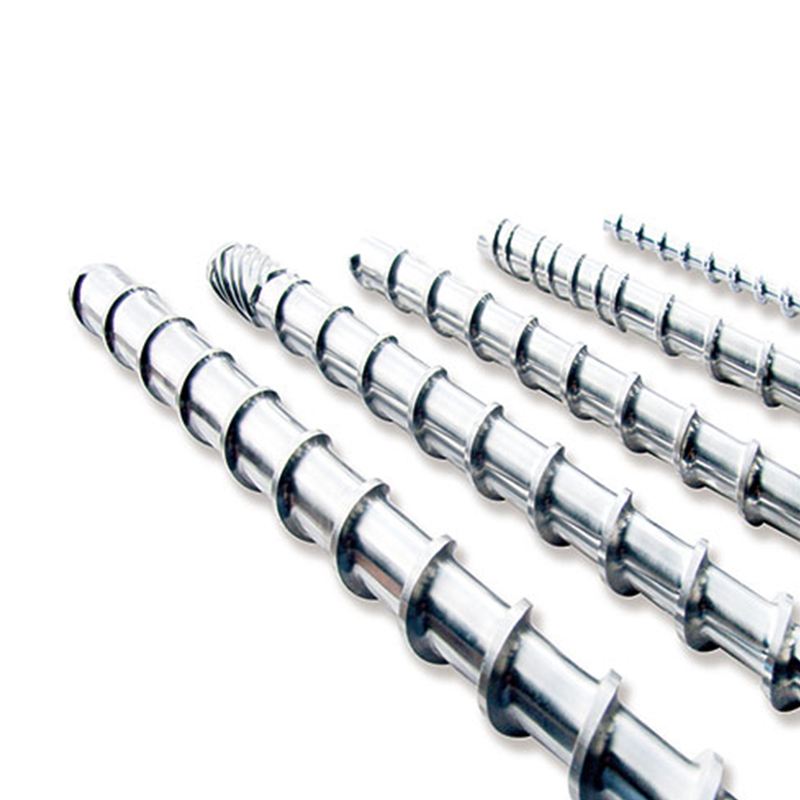
- Extruder barrel & screw: The heart of the system — screw geometry, L/D ratio, and temperature zoning determine melt quality and output stability.
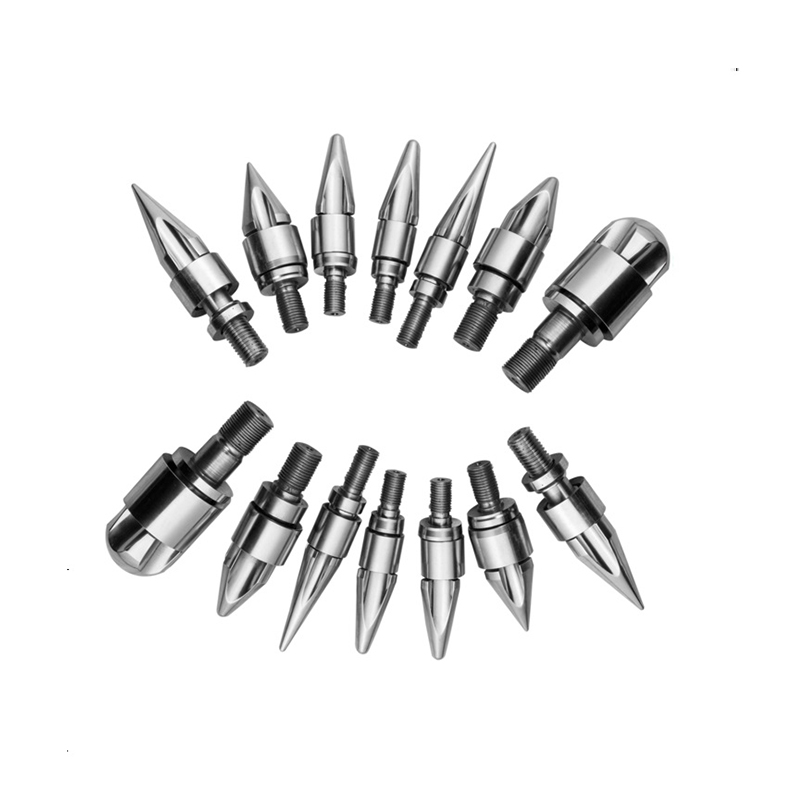
- Crosshead die: Aligns the melt flow concentrically around the conductor; die geometry determines wall eccentricity, one of the most closely monitored quality parameters.
- Cooling trough: Rapid, uniform quenching locks in dimensions; water temperature and trough length are tuned to the polymer and line speed.
- Spark tester: Applies high voltage (typically 3–15 kV) across the insulation at full line speed to detect pinholes before take-up.
- Laser diameter gauge & capacitance monitor: Continuously measures OD and wall eccentricity; closed-loop systems feed data back to the extruder and capstan to maintain spec.
- Capstan & take-up reel: Controls line speed and reel traverse to produce a neatly wound, kink-free drum.
What Are the Main Types of Wire & Cable Extruders?
The four principal extruder configurations — single-screw, twin-screw, tandem, and co-extrusion — address different materials, production volumes, and product specifications. Choosing the wrong type is the most common and most expensive mistake a cable manufacturer can make.
| Type | Typical L/D Ratio | Best Materials | Output Range | Key Advantage |
| Single-Screw | 20:1 – 30:1 | PVC, XLPE, PE, LSZH | 30 – 800 kg/h | Low cost, simple maintenance |
| Twin-Screw (Co-rotating) | 36:1 – 48:1 | Halogen-free compounds, TPE, PVC dry-blend | 50 – 1,200 kg/h | Superior mixing, handles powder feed |
| Tandem | Combined 40:1+ | XLPE (peroxide crosslink) | 200 – 2,000 kg/h | Separation of melting & metering stages |
| Co-extrusion (2–3 layer) | Multiple units | XLPE + semiconducting screen | Application-specific | Simultaneous multi-layer application |
| Table 1 — Comparison of main wire & cable extruder configurations by application and key parameters | ||||
Single-Screw Extruder: The Industry Workhorse
Single-screw extruders account for approximately 70–75% of all installed wire & cable extrusion equipment worldwide, primarily because they deliver reliable, cost-effective performance with PVC and polyethylene — the two most consumed cable insulation materials globally. A well-designed 90 mm single-screw machine running PVC at an L/D of 25:1 can sustain outputs of 300–450 kg/h while maintaining melt temperature uniformity within ±2 °C. Their mechanical simplicity translates directly into lower spare-parts inventory and shorter maintenance windows.
Twin-Screw Extruder: Superior Mixing for Demanding Compounds
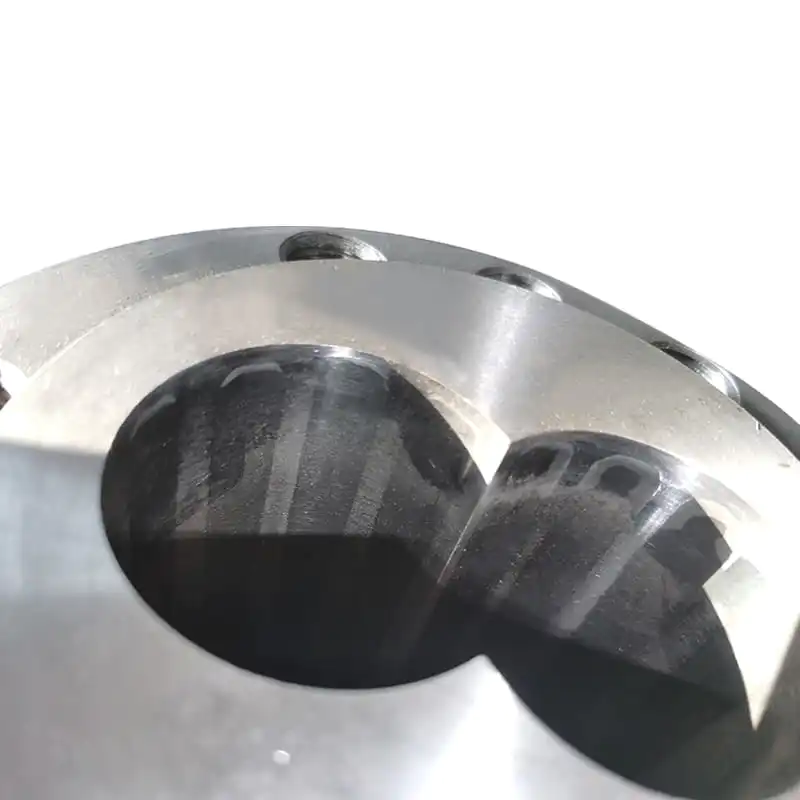
Twin-screw extruders are the preferred choice when the polymer formulation demands intensive distributive and dispersive mixing — for example, low-smoke zero-halogen (LSZH) compounds that contain up to 60% mineral filler by weight. The intermeshing screw design provides self-wiping action and positive conveying, reducing dwell time and thermal degradation risk. In halogen-free cable production for rail, aerospace, and tunnel applications, twin-screw technology is essentially mandatory.
Co-Extrusion Lines: Enabling Multi-Layer High-Voltage Cable
Three-layer co-extrusion — applying inner semiconducting screen, XLPE insulation, and outer semiconducting screen simultaneously — is the standard process for medium- and high-voltage power cables rated from 10 kV to 500 kV. Because all three layers are applied in a single pass through one triple-layer crosshead, the interfaces remain clean and thermally bonded, eliminating the risk of contamination that would occur if the layers were applied in separate passes. A state-of-the-art 150/60/60 mm triple-screw co-extrusion system can process cables at speeds exceeding 10 m/min for 35 kV XLPE-insulated cores.
Which Technical Specifications Matter Most When Evaluating a Cable Extruder?
The six parameters below determine 90% of whether a wire & cable extruder will meet your production targets and quality standards. Understanding each one prevents costly mismatches between machine capability and product requirements.
| Parameter | Typical Range | Why It Matters |
| Screw Diameter (mm) | 30 – 200 mm | Directly sets maximum throughput capacity |
| L/D Ratio | 20:1 – 40:1 | Controls melt homogeneity and plasticizing efficiency |
| Screw Speed (RPM) | 10 – 150 RPM (single); up to 600 RPM (twin) | Affects shear heat, output rate, and melt temperature |
| Temperature Zone Control | 4 – 10 independent zones | Precision ±1 °C zoning prevents degradation & voids |
| Drive Motor Power (kW) | 5 – 400 kW | Determines specific energy consumption per kg of output |
| Max Line Speed (m/min) | 50 – 3,000 m/min | Determines annual output per shift and payback period |
| Table 2 — Critical technical parameters for wire & cable extruder selection | ||
Understanding L/D Ratio: More Is Not Always Better
A common misconception is that a higher L/D ratio always improves melt quality. In practice, an unnecessarily long barrel increases dwell time, which accelerates thermal degradation in heat-sensitive materials like PVC compounds with tight stabilizer budgets. For standard PVC wire insulation, an L/D of 20:1 to 25:1 is optimal. Fluoropolymers (PTFE, FEP, PFA) used in aerospace wiring, by contrast, benefit from short barrels of 15:1 to 20:1 to minimize corrosive off-gassing. XLPE production for medium-voltage cables typically requires 24:1 to 30:1 to achieve complete peroxide dispersion without premature crosslinking.
Which Materials Can a Wire & Cable Extruder Process?
Modern cable extruders handle the full range of thermoplastic and thermoset insulation materials, but each polymer class demands a specific screw and barrel configuration — attempting to run the wrong material through an incompatible machine causes both poor product quality and premature equipment wear.
- PVC (Polyvinyl Chloride): The dominant cable insulation material globally — estimated 40–45% of total volume — processed at melt temperatures of 150–190 °C. Requires corrosion-resistant barrel liners due to HCl release during degradation.
- PE & XLPE (Polyethylene / Crosslinked PE): Standard for medium- and high-voltage power cables. XLPE requires either peroxide (silane grafting or e-beam) crosslinking processes, with peroxide systems needing nitrogen-blanketed, pressurized crosslinking tubes.
- LSZH / LSOH (Low Smoke Zero Halogen): Mandatory in rail, metro, and building applications in many countries. High filler loading (ATH or MDH) demands twin-screw extruders with wear-resistant screws and high-torque drives.
- TPE / TPU (Thermoplastic Elastomers / Urethane): Increasingly used for flexible portable cables, EV charging cables, and robotics applications requiring repeated flex cycles up to 10 million movements.
- Fluoropolymers (FEP, ETFE, PFA): Used in aerospace, oil & gas, and high-frequency data cables. Require special alloy barrels and tool steels, and processing temperatures of 320–400 °C.
- Silicone Rubber: Common in automotive engine compartment wiring and medical cables. Requires a cold-feed extruder with a hot vulcanization tube (HAV or steam CV line).
How Is Automation Transforming the Modern Cable Extruder?
Closed-loop automatic process control has fundamentally changed what a wire & cable extrusion line can achieve — reducing scrap rates from 3–5% on manually controlled lines to below 0.5% on fully automated lines, while allowing smaller crews to supervise more machines simultaneously.
Closed-Loop Diameter Control
Laser scanners measuring at 1,000+ samples per second feed OD data into a PLC that automatically adjusts capstan speed (±0.01%) and extruder RPM (±0.1 RPM) to maintain target diameter. On a high-speed building wire line running at 800 m/min, this prevents the material waste and rejection costs that occur when manual corrections lag behind process variation.
Industry 4.0 Integration: MES and Real-Time OEE Monitoring
Leading cable extruder systems now ship with OPC-UA protocol connectivity, enabling direct integration with Manufacturing Execution Systems (MES). Production managers can monitor Overall Equipment Effectiveness (OEE), specific energy consumption (kWh/kg), and first-pass yield from a central dashboard across multiple lines or even multiple factories. Predictive maintenance modules — using vibration analysis on the main gearbox and thermal imaging of barrel zones — have demonstrated 30–40% reductions in unplanned downtime at large-scale cable plants.
How Do You Choose the Right Wire & Cable Extruder for Your Application?
The right extruder is the one that matches your specific product range, annual volume, and floor space — not simply the highest-spec machine on the market. Work through the five selection criteria below before issuing any request for quotation.
| Production Scenario | Recommended Extruder Type | Minimum Screw Ø | Automation Level |
| Building wire (PVC, <6 mm²) | Single-screw, 60–90 mm | 60 mm | Closed-loop diameter control |
| Power cable (XLPE, 10–35 kV) | Triple co-extrusion | 120/60/60 mm | Full closed-loop + MES integration |
| LSZH rail/transit cable | Twin-screw, 75–120 mm | 75 mm | Closed-loop diameter + torque monitoring |
| Automotive harness (PVC/XLPE, thin wall) | Single-screw, 30–45 mm, high-speed | 30 mm | High-speed laser gauge + spark tester |
| Optical fiber buffer tube (PA/PBT) | Single-screw, 30–50 mm, precision | 30 mm | Precision OD control ±0.01 mm |
| Table 3 Extruder selection guide by cable type and production scenario | |||
Five Questions to Ask Before Specifying an Extruder
- What materials will you run? List every compound — including future products — because screw metallurgy, barrel liner material, and temperature capability are fixed at manufacture.
- What is your annual production volume? Calculate required hourly throughput from your annual tonnage and planned operating hours (typically 5,500–7,500 h/year for three-shift operations). Overspecifying wastes capital; underspecifying destroys margins.
- What conductor range will you process? The same extruder that insulates 0.5 mm² automotive wire at 1,500 m/min cannot economically apply thick jacket to 300 mm² power cable at 3 m/min — they are fundamentally different machine configurations.
- What quality standards apply? IEC 60502, UL 44, VDE 0276, or AS/NZS 1125 each have specific requirements for concentricity, surface finish, and electrical properties that influence crosshead design and instrumentation.
- What is your total cost of ownership budget over 10 years? A lower-price machine with higher specific energy consumption (e.g., 0.35 kWh/kg vs. 0.22 kWh/kg) will cost significantly more over its operating life at high volumes — a difference of 5,000 annual production hours and 400 kg/h throughput translates to nearly 260,000 kWh per year of additional energy cost.
What Maintenance Does a Wire & Cable Extruder Require?
Proper preventive maintenance is what separates a cable extruder that delivers 15–20 years of productive life from one that degrades in five — and the screw and barrel account for roughly 60% of all maintenance costs over the machine's life.
- Daily: Check barrel temperature zone deviations (>±3 °C indicates failing heater band or thermocouple); inspect cooling water flow and temperature; verify spark tester voltage calibration.
- Weekly: Measure screw and barrel wear using bore gauges and screw profile templates — industry standard allows maximum diametric clearance of 0.5–0.8% of screw diameter before performance degrades.
- Monthly: Lubricate thrust bearing and gearbox (check oil level and viscosity); calibrate laser gauge against certified reference targets; clean screen changer.
- Annually: Full pull-and-inspect of screw; barrel bore measurement; gearbox oil analysis; electrical insulation test on heater bands; recalibration of all measurement instruments to traceable standards.
Frequently Asked Questions About Wire & Cable Extruders
Q: What is the difference between a pressure die and a tubing die in a cable crosshead?
A pressure die (also called a coating die) makes contact with the conductor at the die land and works by forcing melt onto the conductor under melt pressure — producing excellent adhesion and suitable for insulation passes. A tubing die draws the polymer over the conductor without contact, creating a tube that collapses onto the conductor under vacuum or cooling tension — used for jacketing passes where bond is not required and surface cosmetics are prioritized.
Q: How do I reduce wall eccentricity on my cable extrusion line?
Eccentricity above the standard tolerance (typically <10% for most insulated wire standards) usually results from one or more of four causes: worn die tip or guide bushing, conductor catenary due to insufficient tension control, melt temperature imbalance across the crosshead, or crosshead misalignment. A systematic approach — starting with die alignment verification, then catenary measurement, then melt temperature profiling — resolves most cases without needing to replace tooling.
Q: Can a single-screw extruder process LSZH compounds?
Yes, but with important limitations. For LSZH compounds supplied as pre-compounded pellets (not dry-blend), a well-designed single-screw with a mixing section and hardened wear-resistant screw can produce acceptable results. However, for highly filled systems or when processing from dry-blend to reduce compound cost, a twin-screw extruder is strongly recommended. Running abrasive LSZH compounds through a standard single-screw will accelerate barrel and screw wear significantly, typically cutting service life from 5,000+ hours to under 2,000 hours.
Q: What is the typical ROI period for a new cable extrusion line?
For high-volume building wire production, payback periods of 24–36 months are common when the line operates at planned capacity (typically >80% OEE). For specialty cable — power cables, LSZH, automotive — where pricing margins are higher, payback can be 18–30 months. The primary variable is utilization: a line running two shifts versus three shifts takes 50% longer to recoup capital, which is why production planning is as important as machine selection.
Q: Is a nitrogen-blanketed extruder necessary for XLPE crosslinking?
For peroxide-crosslinked XLPE used in medium and high-voltage cables, a continuous vulcanization (CV) tube with a nitrogen atmosphere is essential — oxygen in the melt causes surface oxidation, porosity, and crosslinking inhibition that renders the cable electrically unreliable. For silane-crosslinked XLPE used in low-voltage distribution cables, the crosslinking reaction occurs during steam sauna post-treatment rather than in-line, so nitrogen blanketing in the extruder zone is not required, though dry raw material and low-humidity storage remain critical.
Q: How does screw design affect the output quality of a wire & cable extruder?
Screw geometry — feed zone depth, compression ratio (typically 2.5:1 to 3.5:1 for most cable compounds), metering zone length, and the presence of mixing elements — directly determines melt temperature uniformity and output stability. A poorly matched screw can cause melt temperature oscillations of ±10–20 °C that translate directly into diameter variation, surface roughness, and reduced dielectric strength. For each polymer family, there is an optimized screw design; using a generic "universal" screw is rarely the best technical choice for a dedicated production line.
Conclusion: Getting Wire & Cable Extrusion Right Starts with the Machine
A wire & cable extruder is far more than a commodity piece of machinery — it is the quality-determining element of the entire cable production process. Screw type, L/D ratio, die configuration, temperature control precision, and automation level all cascade directly into product consistency, scrap rate, energy cost, and regulatory compliance.
The global cable extrusion equipment market was valued at approximately USD 3.1 billion in 2023 and continues to grow as demand for EV charging infrastructure, renewable energy cables, and high-speed data cables accelerates. Manufacturers who invest in correctly specified, well-maintained extruders gain a compounding competitive advantage: lower cost per meter, higher first-pass yield, and the flexibility to qualify and produce next-generation cable constructions that less capable equipment cannot.
Whether you are specifying your first production line or replacing aging equipment, the framework in this guide — material compatibility, throughput requirements, automation level, and total cost of ownership — provides a structured basis for an informed decision. Engaging with an applications engineer early in the specification process, rather than after a purchase order is placed, consistently produces better technical and commercial outcomes.